

Engine components are rarely interchangeable between different car models,and even if some components have similar appearances,there are significant differences in internal parameters and installation dimensions.When selecting accessories,one should not rely solely on the appearance of the naked eye.It is necessary to clarify the differences between the car series and engine models,conduct multidimensional checks,and select suitable accessories to avoid assembly failures.
Firstly,abandon the misconception that"just look the same and you can use it"and identify the core identification information accurately.Different brand car series have completely different engine platforms;Even different car models within the same group may not necessarily have interchangeable accessories.When making a purchase,you cannot only look at the vehicle brand.You need to retrieve the vehicle VIN code,check the engine nameplate,record the engine model,displacement,and year of manufacture,and query the original OE part number.The part number is the most reliable basis for cross vehicle selection and has more reference value than the model name.It is strictly prohibited to directly apply parts across vehicle series.
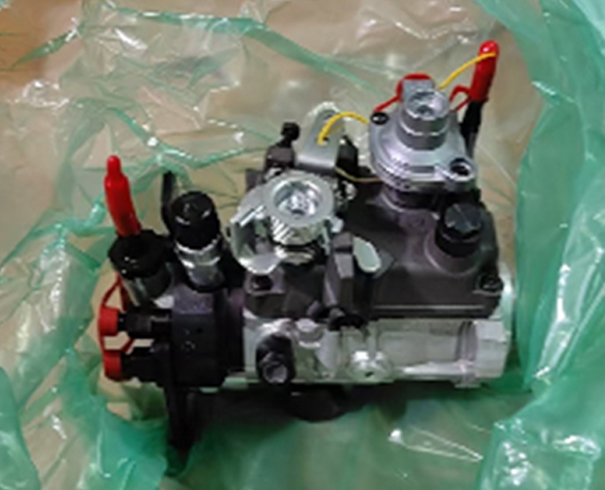
Secondly,distinguish between general and specialized parts and classify them for procurement.A small number of external accessories,such as some sensors,filters,and seals,may be interchangeable on derivative models of the same platform.The internal core components such as pistons,crankshafts,connecting rods,cylinder liners,fuel injectors,valves,etc.are basically exclusive accessories for vehicle series and models.The cylinder diameter,stroke,and compression ratio designs of different car models vary,and the core component parameters are also different.Forcefully mixing them can result in improper assembly,abnormal noise,insufficient power,and even direct damage to the engine.
Then verify the physical parameters and installation structure,and make a physical comparison.After receiving the accessories,compare the interface,hole position,size,and screw position with the original old parts of the car.Some accessory interfaces look similar,but there are slight differences in the position of screw holes and the direction of pipelines,making it impossible to install them properly.At the same time,pay attention to the differences in emission versions.Engine components from the new and old national standards cannot be interchanged between different vehicle models,especially fuel injection systems and aftermarket components.Mismatching can directly cause the vehicle to report fault codes.
Furthermore,choose legitimate channels and refuse to substitute parts across different vehicle series.Provide complete vehicle information to the supplier during procurement,and ask the merchant to assist in verifying the compatibility relationship.Do not believe the merchant's verbal statement that it can be used interchangeably.When the budget is limited,priority should be given to selecting legitimate brand parts corresponding to your own car series,and do not use dismantled or modified parts from other car series as substitutes to save money.When encountering scarce parts,professional maintenance technicians should be consulted to confirm the feasibility of replacement,and do not attempt to assemble them on your own.
In summary,when selecting cross vehicle engine parts,subjective experience should not be relied upon for judgment.Using VIN code and OE part number as the core,distinguish between general and special parts,carefully check installation dimensions,and treat so-called general substitute parts with caution.Adhere to matching accessories with the corresponding engine models of the vehicle series in order to ensure smooth assembly,maintain normal engine operation,and avoid various risks caused by mismatches.
Este sitio web utiliza cookies para garantizar que obtenga la mejor experiencia en nuestro sitio web.
 English
 Pусский
 Français
 العربية


Comentario
(0)